 SafeCore Safety Academy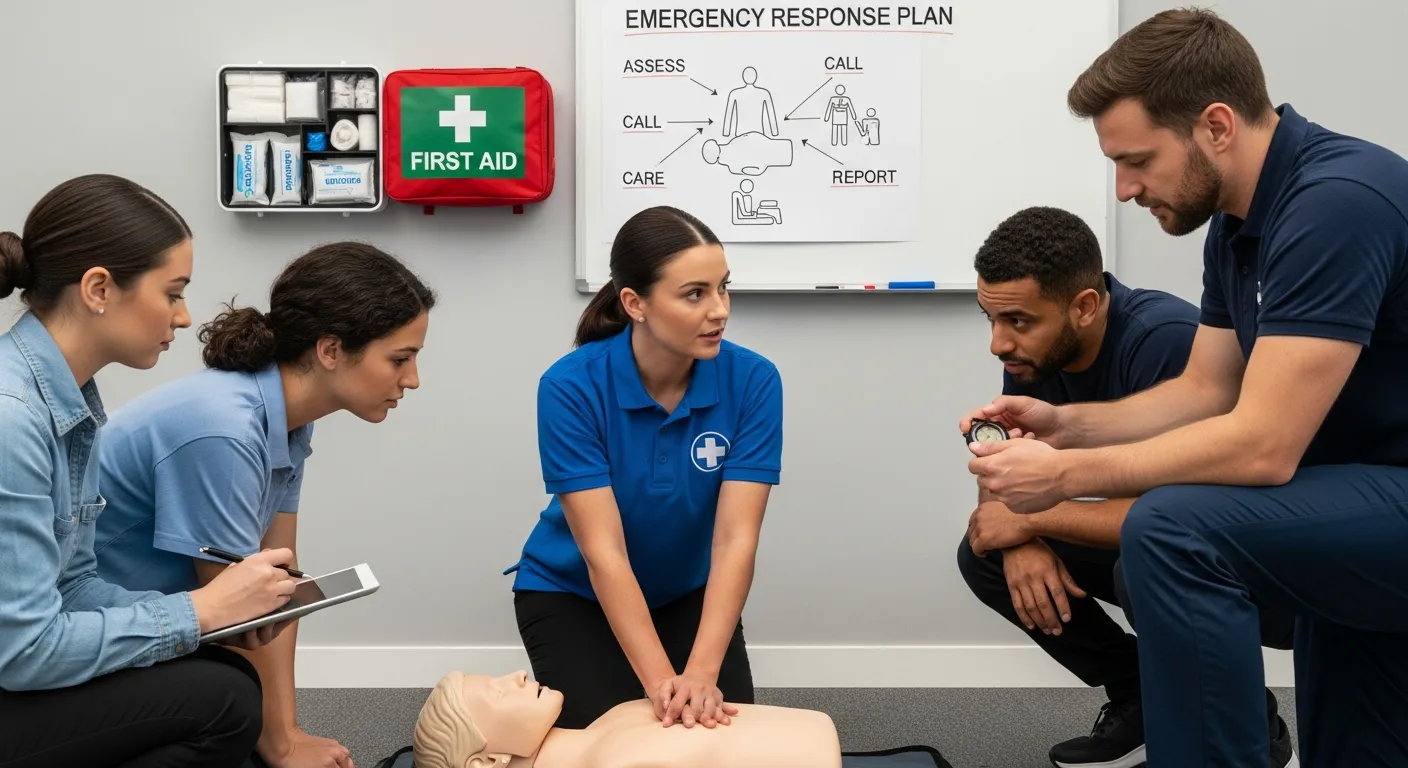
First Aid Essentials: What Every Worker Should Know
Why First Aid Knowledge is Critical
In an emergency, the actions taken in the first few minutes can mean the difference between life and death. First aid is the immediate care given to an injured or ill person before professional medical help arrives. Every worker should have basic first aid knowledge because accidents can happen at any time, in any workplace.
The First Aid Kit
Every workplace should have a well-stocked first aid kit that is easily accessible. Essential items include:
- Adhesive bandages in various sizes
- Sterile gauze pads and medical tape
- Elastic bandages for sprains and strains
- Antiseptic wipes and antibiotic ointment
- Disposable gloves
- Scissors and tweezers
- CPR breathing barrier
- Emergency blanket
- Eye wash solution
- First aid manual
Common Workplace Injuries and First Aid
Cuts and Wounds
For minor cuts, clean the wound with water, apply antiseptic, and cover with a sterile bandage. For deep or heavily bleeding wounds, apply direct pressure with a clean cloth and seek medical attention immediately.
Burns
For minor burns, run cool (not cold) water over the burn for at least 10 minutes. Do not apply ice, butter, or ointments. Cover with a sterile, non-stick bandage. For severe burns, call emergency services immediately.
Fractures and Sprains
Do not move the injured area. Apply ice wrapped in a cloth to reduce swelling. Immobilize the injury and seek medical attention. For suspected spinal injuries, do not move the person at all — wait for emergency services.
Chemical Exposure
If chemicals contact the skin, remove contaminated clothing and flush the area with water for at least 15 minutes. For chemical eye exposure, flush eyes with clean water for at least 20 minutes. Refer to the Safety Data Sheet (SDS) for specific instructions.
CPR Basics
Cardiopulmonary Resuscitation (CPR) is a life-saving technique used when someone's heart stops beating. The basic steps are:
- Check the scene for safety
- Check for responsiveness — tap and shout
- Call emergency services (or ask someone to call)
- Begin chest compressions — push hard and fast in the center of the chest, at least 2 inches deep, at a rate of 100-120 compressions per minute
- If trained, give rescue breaths after every 30 compressions
- Continue until professional help arrives or the person begins breathing
Using an AED (Automated External Defibrillator)
Many workplaces now have AEDs. These devices are designed to be used by anyone, even without formal training. Follow the voice prompts: turn on the device, attach the pads to the patient's bare chest, and follow the instructions for delivering a shock if advised.
Conclusion
First aid knowledge empowers workers to respond effectively in emergencies. Regular first aid training and refresher courses ensure that skills stay sharp. SafeCore Safety Academy offers certified First Aid and CPR courses that comply with industry standards. Enroll today and be prepared to save a life.
Related Articles
How to Identify and Control Workplace Hazards
Mar 05, 2026Categories
Recent Posts